


By using iNNo sOFt UG, you agree to the Privacy Policy and Terms of Use.
Accept
INNo sOFt UGINNo sOFt UGINNo sOFt UG
  • Home
  • Entertainment
    • Events
  • National
    • Politics
    • Business
  • Gossip
  • Music
  • Sports
  • Profiles
Reading: Falling Shilling Raises Import Costs as Uganda’s Trade Gap Widens
Share
Font ResizerAa
Font ResizerAa
INNo sOFt UGINNo sOFt UG
  • Home
  • Entertainment
  • National
  • Gossip
  • Events
  • Home
  • National
  • Gossip
  • Music
  • Entertainment
  • Politics
  • Business
  • Events
  • Sports
  • Quick Access
    • About Us
    • Privacy Policy
Follow US
  • About Us
  • Privacy Policy
  • Contact
  • Blog
© 2026 INNO SOFT UG. All rights reserved. Fast. Fresh. Digital Media.
Business

Falling Shilling Raises Import Costs as Uganda’s Trade Gap Widens

iNNosOFt Admin
iNNosOFt Admin
October 6, 2026
Share
SHARE

By iNNoSOFt UG | Business & Economy

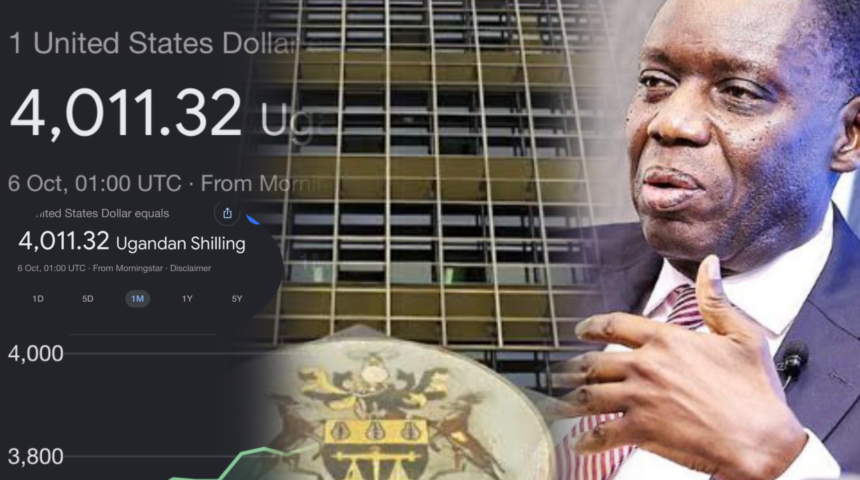
Uganda’s Shilling is coming under renewed pressure, recently crossing the Shs4,000-per-dollar mark as demand for foreign currency rises, particularly from fuel and merchandise importers.
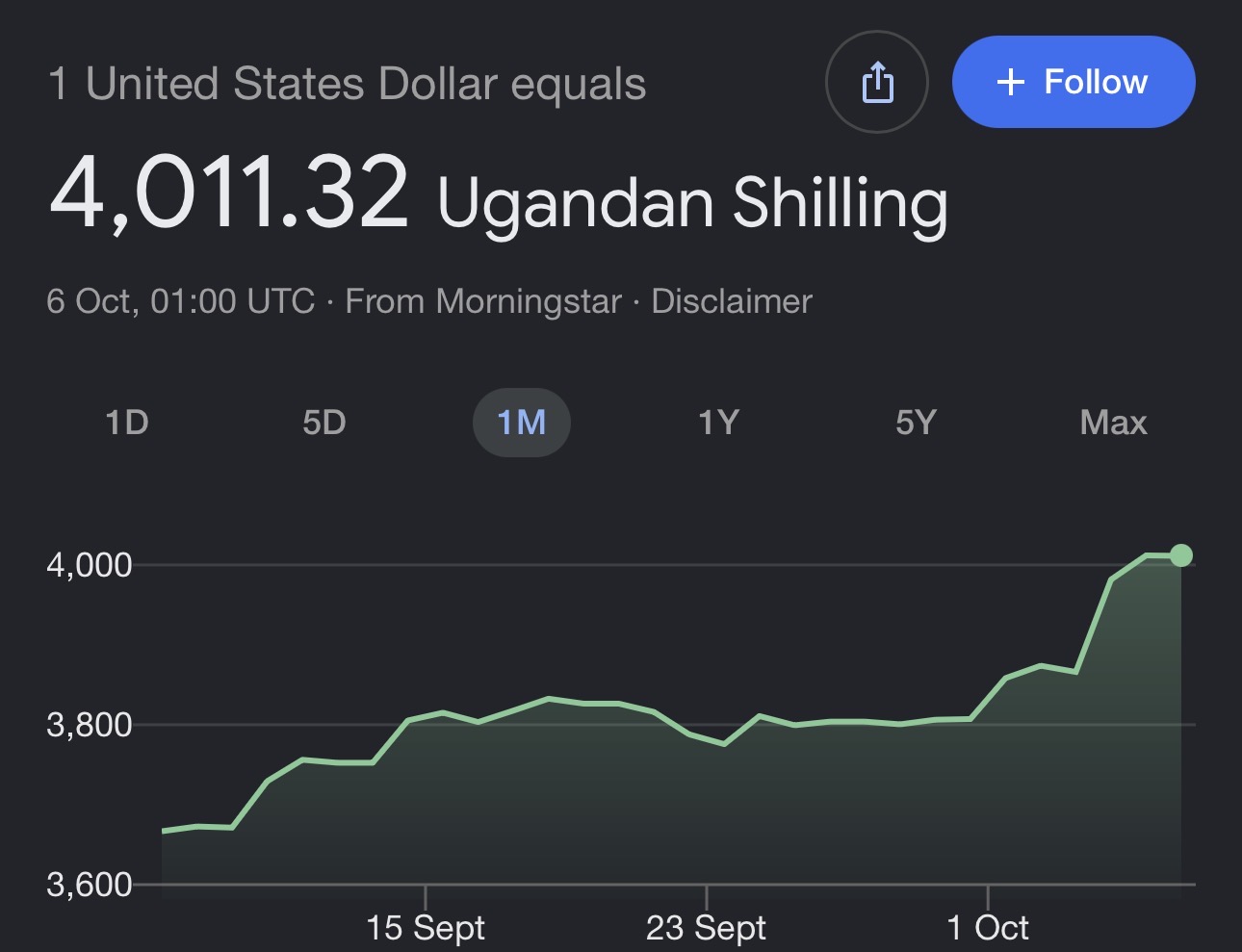
The currency has depreciated by roughly 13 percent over the past year, increasing the cost of imported goods and putting additional pressure on businesses and consumers.

Bank of Uganda Governor Michael Atingi-Ego has acknowledged the pressure, saying the Shilling is market-determined and assuring the public that the central bank has the tools to manage excessive volatility.

“The Bank of Uganda has what it takes to stabilise this exchange rate. So, be still. All will be fine,” Atingi-Ego said.

Uganda’s growing import bill is adding to the challenge. Merchandise imports rose 25.4 percent to US$1.61 billion in July 2026, while exports increased by only 10.1 percent to US$1.40 billion, according to the Ministry of Finance.

The trade gap was even wider in June, when Uganda’s merchandise deficit more than doubled to US$597.9 million.

A weaker Shilling means importers require more local currency to purchase dollars, raising the cost of products such as fuel, vehicles, machinery, electronics and industrial inputs. These higher costs can eventually be passed on to consumers.

Depreciation can, however, make Ugandan exports more competitive on international markets. The challenge is whether export growth can outpace rising imports.

For Uganda, the long-term solution remains increasing export earnings, boosting local production and reducing excessive dependence on imported goods.

As the Shilling faces renewed pressure, the widening gap between what Uganda exports and what it imports remains a key concern for the economy.


You Might Also Like

Uganda’s Falling Shilling: Causes, Consequences and the Way Forward
Revolutionary Eco Friendly City Square Shopping Mall Project: Hajji Hassan Bulwadda’s Vision Set To Mark a New Chapter For Kampala.
Share This Article
Facebook Email Print
Leave a Comment

Leave a Reply Cancel reply

Your email address will not be published. Required fields are marked *

Search

More from iNNo sOFt UG

  • Home
  • Entertainment
  • National
  • Gossip
  • Events

Latest Stories

Chagga Claims Late Mowzey Radio Was Burundian, Sparking Fresh Debate
Katonga Bridge Reopens After Two Years Of Flood-Related Disruptions
Breaking News: One Person Dead In Horrific Head-on Collision On Bombo-kalule Highway
France Faces Public Anger as Cost-of-Living Pressures Fuel Protests
Muhoozi Urges Caution When Judging Pastors, Says Believers Should Examine Their Fruits

Socials

Categories

  • National
  • Entertainment
  • Sports
  • Celebrity Gossip
  • Politics
  • Events
  • Music

About US

We are iNNo sOFt UG, Your Reliable Source for Fast, Fresh Breaking News, Trends and Entertainment
Quick Links
  • About Us
  • Privacy Policy
  • Contact
  • Blog

Subscribe US

Subscribe to our newsletter to get our newest articles instantly!

    © 2026 INNO SOFT UG. All rights reserved. Fast. Fresh. Digital Media.
    Welcome Back!

    Sign in to your account

    Username or Email Address
    Password

    Lost your password?