

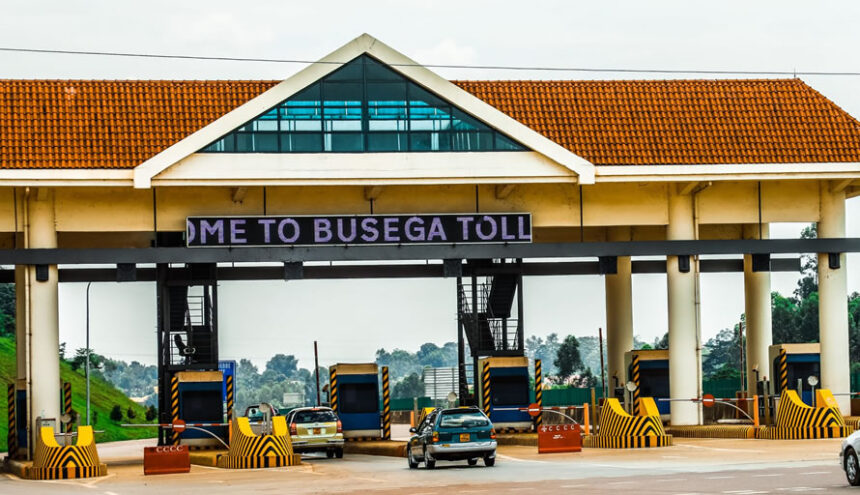
KAMPALA — The Kampala–Entebbe Expressway has come under fresh scrutiny after Members of Parliament questioned the cost, functionality and procurement of the tolling system used to collect revenue from motorists.
The Parliamentary Committee on Physical Infrastructure has raised concerns over a Shs5 billion tolling system, questioning whether the technology delivered value for money and whether Government has sufficient control over the system used to account for public revenue.
The scrutiny comes amid revelations of serious weaknesses in toll collection. Parliament reported that an internal audit found 10,446 vehicles that could not be reconciled in the expressway’s toll records, with suspected revenue losses exceeding Shs1 billion. (Parliament of Uganda)
During an on-site inspection at Kajjansi Toll Centre, MPs also witnessed a situation where a bus that should have paid Shs15,000 was charged only Shs5,000 after an electronic card meant for light vehicles was manually used to open the barrier. The incident raised concerns about the possibility of revenue leakage through weaknesses in the system. (Parliament of Uganda)
Former UNRA Executive Director Allen Kagina also told MPs that required monitoring software and an automatic vehicle-classification system had not been installed as required under the contract, resulting in vehicles being classified manually by toll operators. (Monitor)
The committee is now demanding answers from officials over the procurement and performance of the system, the management of toll revenue and the broader Shs122.86 billion operation and maintenance contract awarded to Egis for the expressway. (Monitor)
Questions have also been raised over whether Government could have developed and managed a more cost-effective tolling system locally instead of relying heavily on external contractors.
The revelations have intensified calls for greater transparency in the management of the expressway, particularly because toll revenue is expected to contribute towards maintaining the road and servicing the loan used to finance its construction.
The parliamentary probe is expected to establish whether the expenditure represented value for money, identify responsibility for any procurement or operational failures, and determine how much revenue may have been lost through weaknesses in the tolling system.
The allegations and financial concerns remain subject to parliamentary investigation and should not be treated as proof of individual criminal wrongdoing until established by the relevant authorities.