


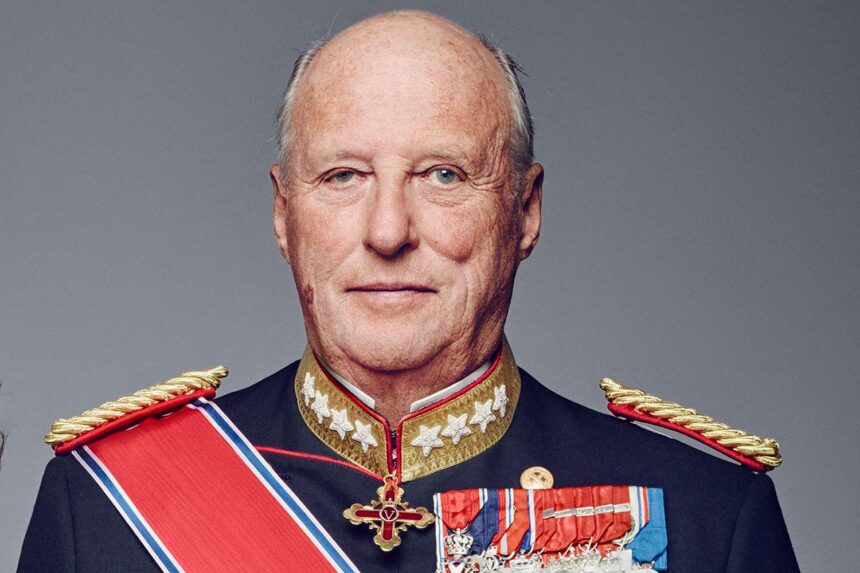
OSLO, NORWAY — Norway is mourning the death of King Harald V, who passed away peacefully at Oslo University Hospital on Friday, August 28, at the age of 89.
The Norwegian Royal Palace confirmed the monarch’s death, bringing to an end a more than three-decade reign that saw Harald become one of Europe’s most respected and longest-serving monarchs.
Harald had been admitted to hospital on August 17 and was being treated for a bacterial infection in his blood. His health had deteriorated in recent days, with the palace previously describing his condition as extremely serious.
His death immediately triggered a change at the top of Norway’s monarchy. His only son, Crown Prince Haakon, 53, has succeeded him and becomes King Haakon VIII of Norway.
A KING WHO MODERNISED THE MONARCHY
King Harald ascended the Norwegian throne in 1991 following the death of his father, King Olav V.
Over more than 30 years, Harald became known for presenting a more open and relatable image of the monarchy. He was widely admired for his humility, willingness to speak about tolerance and inclusion, and his ability to provide reassurance to Norwegians during difficult moments.
His reign included periods of national tragedy, including the 2011 extremist attacks, when his public response helped reinforce his image as a unifying figure.
Harald also broke with some traditional expectations surrounding European royalty. He married Sonja Haraldsen, a commoner, in 1968 after years of courtship, a decision that initially faced resistance but eventually became widely accepted by the Norwegian public.
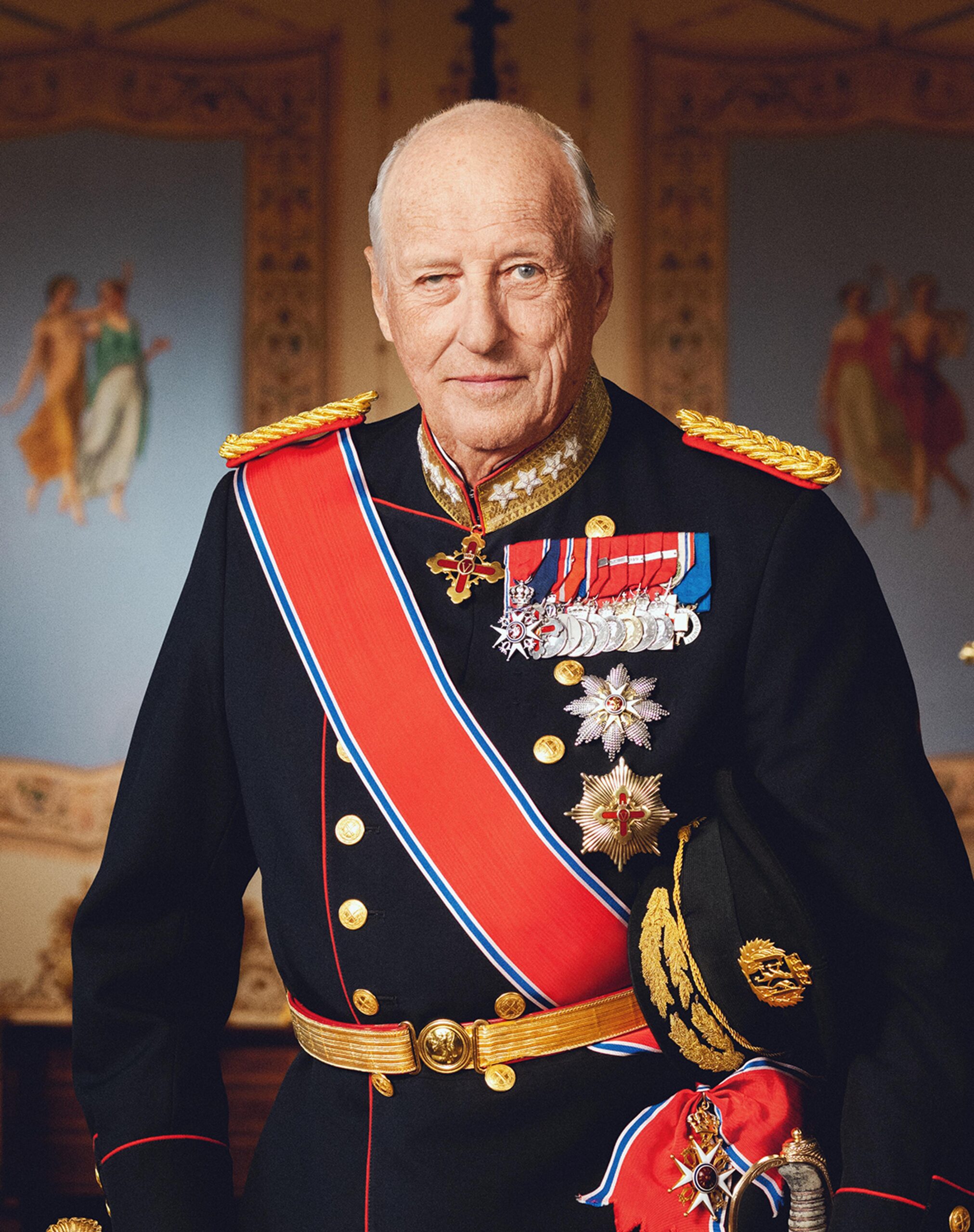
HEALTH CHALLENGES IN HIS FINAL YEARS
The king had experienced a number of health problems in recent years and was repeatedly hospitalised.
In 2024, he was treated for an infection while visiting Malaysia and received a temporary pacemaker before being flown back to Norway. He was later fitted with a permanent device.
Despite his declining health, Harald rejected suggestions that he should abdicate. He maintained that the oath he had taken as king was a lifelong commitment.
A NEW ERA FOR THE NORWEGIAN ROYAL FAMILY
King Haakon VIII now inherits the throne at a challenging moment for Norway’s royal household.
The family has faced intense public scrutiny in recent months, including controversies surrounding Crown Princess Mette-Marit and her son, Marius Borg Høiby. Those developments have contributed to a decline in support for the monarchy, although Harald himself remained highly popular among Norwegians.
The new king will therefore begin his reign while carrying the responsibility of preserving the public confidence his father maintained for decades.
For many Norwegians, however, Friday marks more than a royal succession. It is the end of an era defined by a monarch who remained committed to his role despite advancing age and repeated health challenges.
King Harald V leaves behind a legacy of service, modernisation and national unity.
HIGHLIGHTS
– King Harald V has died at the age of 89.
– He passed away peacefully at Oslo University Hospital on August 28, 2026.
– Harald had been receiving treatment for a bacterial infection in his blood.
– He became King of Norway in 1991 and reigned for more than three decades.
– His son, Haakon, has succeeded him as King Haakon VIII.
– Harald was widely regarded as a popular and modernising monarch.
– His death comes as the Norwegian royal family faces several ongoing controversies.
KEY TAKEAWAYS
A historic reign ends: Harald V’s death closes a significant chapter in modern Norwegian history after more than 30 years on the throne.
Succession is immediate: His son Haakon has assumed the Norwegian crown, beginning a new royal era.
A popular monarch remembered: Despite declining support for the institution of monarchy, Harald himself remained one of Norway’s most respected public figures.
The monarchy faces a new test: King Haakon inherits the throne at a time when the royal family is under increased public scrutiny.